
Southern Kentucky Fire & Sprinkler: Scaling Without the Chaos
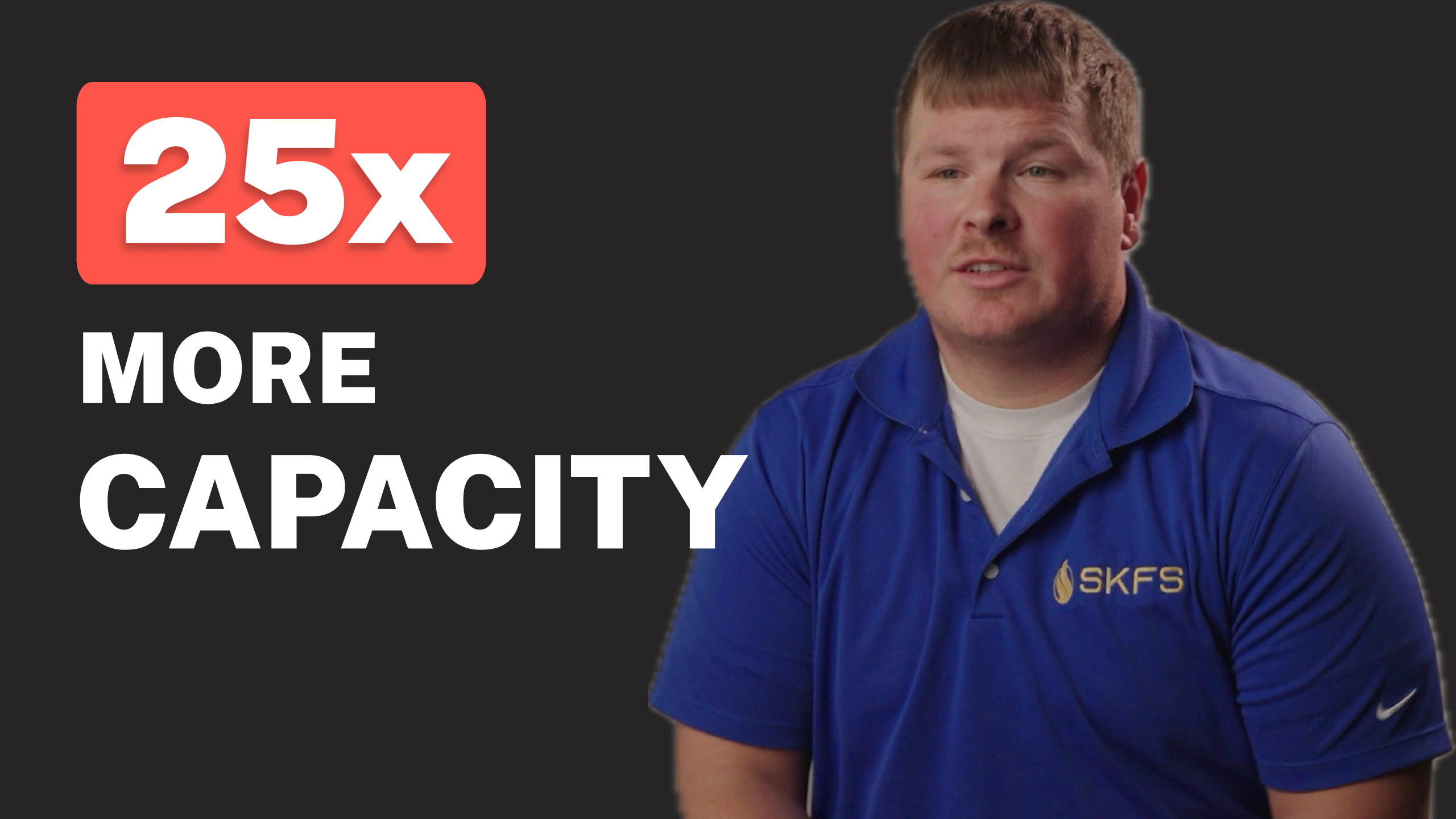
Increased capacity 25x without adding overhead.
Southern Kentucky Fire & Sprinkler is a full-service fire protection company headquartered in Southern Kentucky, serving clients across Bowling Green, Lexington, Louisville, and Nashville, TN. Built for technicians by technicians, they cover the full range of fire protection services with a team of 24, including 14 field technicians, from routine inspections and service calls to large-scale construction and installation projects, across fire alarm, fire extinguisher, and fire sprinkler systems.
The company is co-owned by three partners: Chris Jones (Managing Partner / CEO, overseeing business administration), Shawn Smith (COO, covering all operations), and Garrett Lemaster (leading all construction and new installation work). As the business grew, so did its complexity, and the systems it relied on couldn't keep up.
The Challenge: Limited Visibility and Manual Tracking
Running a fire protection company that handles inspections, service calls, and construction jobs simultaneously means a lot of moving parts. Before Ember, Southern Kentucky Fire & Sprinkler had no centralized system to track any of them. Job costing was done manually, pieced together from paper timecards after the fact. There was no way to see in real time what hours were going to which jobs, what work was outstanding, or where the gaps were.
For the owners, the uncertainty went beyond day-to-day operations.
“There were moments that I wasn't 100% sure how the company would scale originally because everything had to be driven by a person. It doesn't matter how great you are. There's a finite amount of time and you can only accomplish so much”
“The only visibility that we had before Ember was time cards… I would have to manually track what hours were put on jobs.”
Cost tracking was equally fragmented. Data lived in different places, processes weren't connected, and every additional job meant more manual reconciliation and more opportunities for things to fall through the cracks.
"The cost tracking was a nightmare… there were a lot of touch points that could fail or fall through the cracks."
The problem compounded as the business grew. More jobs meant more timecards, more manual entry, and more chances for information to get lost between the field and the office. It wasn't just inefficient, it was becoming a ceiling on how much the business could take on.
"Before Ember, there was chaos. Everything was everywhere all the time."
Why Ember: Built for Fire Protection, Not Adapted to It
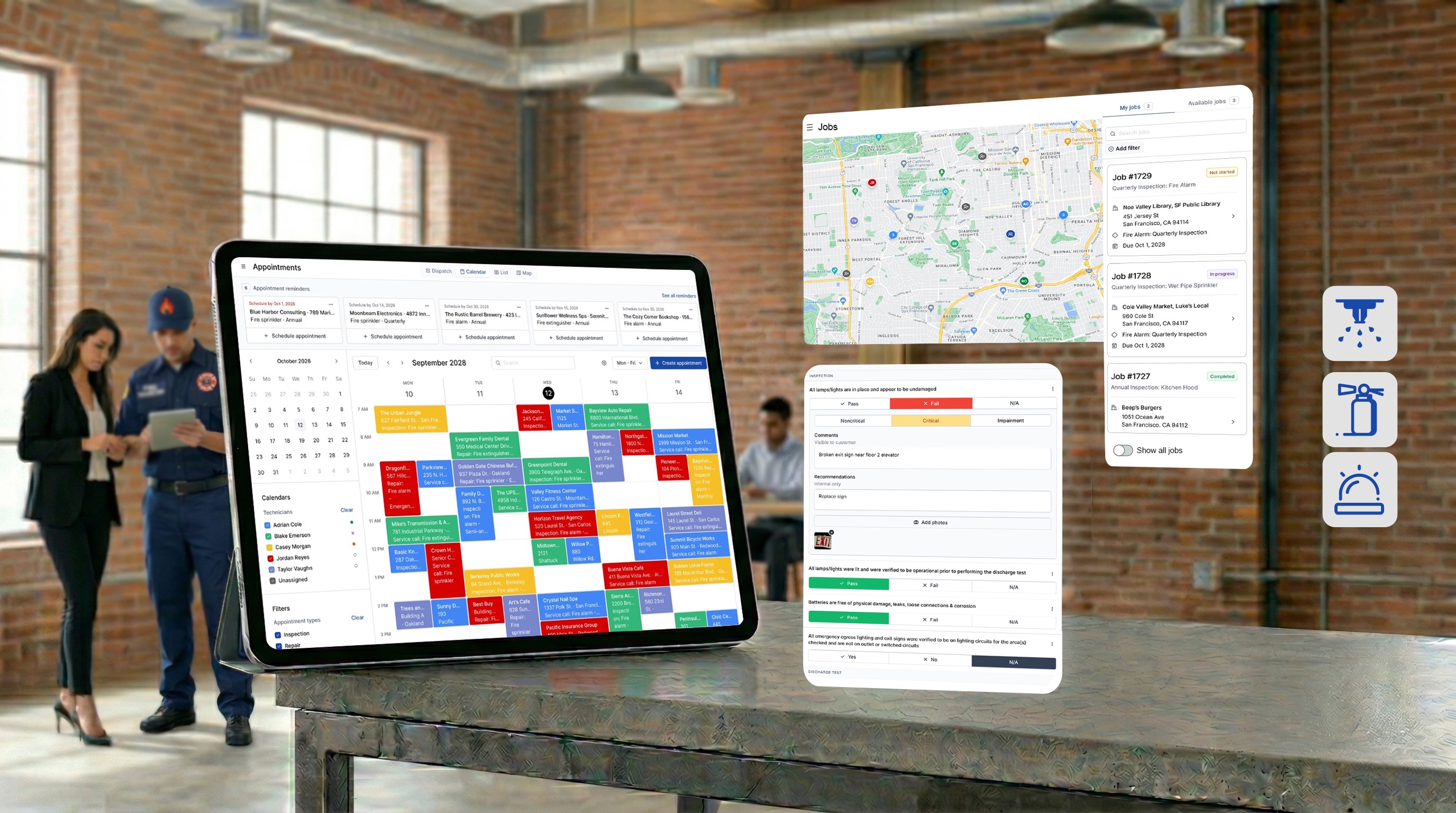
When Southern Kentucky Fire & Sprinkler switched to Ember, the first thing that changed was visibility. Instead of chasing timecards and manually reconciling job costs, the team had a single system where inspections, service calls, and installations all lived in one place. Information captured in the field flowed directly to the office without anyone having to re-enter it.
"The fact that it was purely fire protection centric, you could tell the difference right away."
Unlike generic field service platforms adapted to fit fire protection workflows, Ember was designed specifically for companies like theirs, businesses running inspections, service calls, and construction jobs simultaneously across a regional service area. Fire protection has its own inspection standards, reporting requirements, and job structures that generic tools handle poorly. With Ember, the team wasn't trying to bend a tool designed for a different industry. Everything in the platform, from inspection workflows to job management to reporting, was built around how fire protection businesses actually operate.
For a growing company managing the full scope of fire protection services, that specificity was the difference between a workaround and a real solution.
The Solution: One System to Run the Entire Operation
When Southern Kentucky Fire & Sprinkler switched to Ember, the first thing that changed was visibility. Instead of chasing timecards and manually reconciling job costs, the team had a single system where inspections, service calls, and installations all lived in one place. Information captured in the field flowed directly to the office without anyone having to re-enter it.
Part of what made the difference was how Ember structures work around jobs rather than appointments. Before, managing a recurring account might mean handling dozens of individual appointments, each one needing to be scheduled, tracked, closed out, and reconciled separately. Ember's job management feature consolidates that. Each job serves as a single record, with individual appointments and tasks assigned underneath it, all managed from one place.
I don't want 52 appointments that have to be brought in, closed out, redirected, scheduled. Whereas you can have that job, each one assigned underneath of it and then managed from a single point."
That structure matters in fire protection specifically because the industry runs on reports. Every inspection, every service call, every completed job generates documentation that needs to be tracked, submitted, and tied back to a customer record. Ember's report-driven foundation aligns with how fire contractors actually operate.
"Ember works on a report-driven basis. The fire protection industry is a report-driven industry. The reports are the whole linchpin of the way that Ember functions."
Southern Kentucky Fire & Sprinkler now runs inspections, service calls, and installations through Ember. The same platform that manages a $250 extinguisher inspection handles a half-million dollar construction job.
“You go from a half a million dollar construction job to a $250 inspection and Ember streamlines both.”
The Results: 25x Increase in Capacity
With Ember in place, Southern Kentucky Fire & Sprinkler didn't just get more organized, they unlocked a completely new level of scale.
“Ember probably increased our capacity by 25 times.”
That growth didn't require adding overhead. Before Ember, the team's capacity was effectively capped by how much manual work they could absorb, tracking job hours by hand, reconciling costs after the fact, and managing dozens of fragmented appointments across every active account. Ember removed those bottlenecks through its Jobs feature, which consolidates all appointments, tasks, and documentation under a single job record, and its report-driven workflow, which connects field activity to the office in real time without manual re-entry. The same team of 24 can now take on significantly more inspections, service calls, and construction jobs simultaneously because the administrative work that used to slow everything down is handled automatically within the platform.
The result is a business that scales with the work, not against it.
Key Outcomes:
- Capacity increase: 25x without adding headcount or overhead
- Job management: Single job records replace dozens of fragmented appointments
- Visibility: Real-time field-to-office data flow across inspections, service, and construction
- Cost tracking: Centralized and reliable, eliminating manual reconciliation and data loss
A Platform Built for Growth
For Southern Kentucky Fire & Sprinkler, Ember isn't just a tool, it's a long-term partner in how they operate and grow.
“I can't stress enough, Ember has been really pivotal to our growth.”
“As they continue to improve, we just get to improve with them.”
From Chaos to Scalable Growth
Fire protection is a serious business. The systems being inspected and serviced save lives. But without the right internal systems, growth creates friction instead of momentum.
Southern Kentucky Fire & Sprinkler replaced that friction with Ember. By consolidating fragmented appointments into structured job records through Ember's Jobs feature, and connecting field activity to the office through its report-driven workflow, the team of 24 achieved a 25x increase in capacity without adding headcount, without adding overhead, and without the chaos that once made scaling feel impossible.
News & Resources


Ready to simplify your fire inspection workflow?
Get a Free Demo


