What Is Fire Protection?
Review our guide to fire protection and how it differs from fire prevention today.

Key Takeaways
- Fire protection is an integrated strategy covering detection, suppression, containment, and ongoing compliance, not a single product or system.
- Active fire protection responds to fires in real time through alarms, sprinklers, and suppression systems, while passive fire protection limits fire spread through structural elements like fire-rated walls, doors, and dampers.
- Every fire protection system is designed around three objectives: protecting lives, limiting property damage, and preserving operational continuity after an incident.
- Fire prevention stops fires from starting and fire protection manages the consequences when prevention falls short, but neither substitutes for the other.
- Physical fire protection systems are only as reliable as the inspection and maintenance programs behind them, which is where fire contractors carry the most operational weight.
Ask most people what fire protection means, and they'll point to the sprinkler heads on the ceiling or the extinguisher mounted by the break room door. Those things matter, but they're just two pieces of a much larger system.
Fire protection covers everything that goes into detecting, containing, and suppressing a fire, as well as maintaining the equipment and documentation that keep those systems legally compliant and inspection-ready. Understanding how it all fits together is the foundation of any serious fire safety program.
What Is Fire Protection?
Fire protection is the integrated process of detecting fires early, controlling their spread, suppressing them effectively, and maintaining the systems responsible for doing all three.
Fire protection applies to the physical equipment in a building, the structural features built around that equipment, and the ongoing inspection and compliance work required to keep everything functioning as designed. Since fire protection is a coordinated strategy, its effectiveness depends on every component working together.
The National Fire Protection Association (NFPA) has governed fire protection standards in the U.S. since 1896, publishing more than 300 codes and standards that define how fire protection systems should be designed, installed, tested, and maintained. For commercial buildings, compliance with those standards isn't optional. It's a legal and operational baseline.
What Are Fire Inspection Systems?
Fire inspection systems are the physical fire protection equipment installed in a building, combined with the software and operational processes used to inspect, document, and maintain that equipment in accordance with code.
The physical side of fire inspection systems covers what most people picture when they think about fire protection: detection devices, suppression equipment, and passive structural components. Proving those systems actually work is a separate discipline that includes scheduling inspections, documenting test results, tracking deficiencies, and submitting reports to the Authority Having Jurisdiction (AHJ).
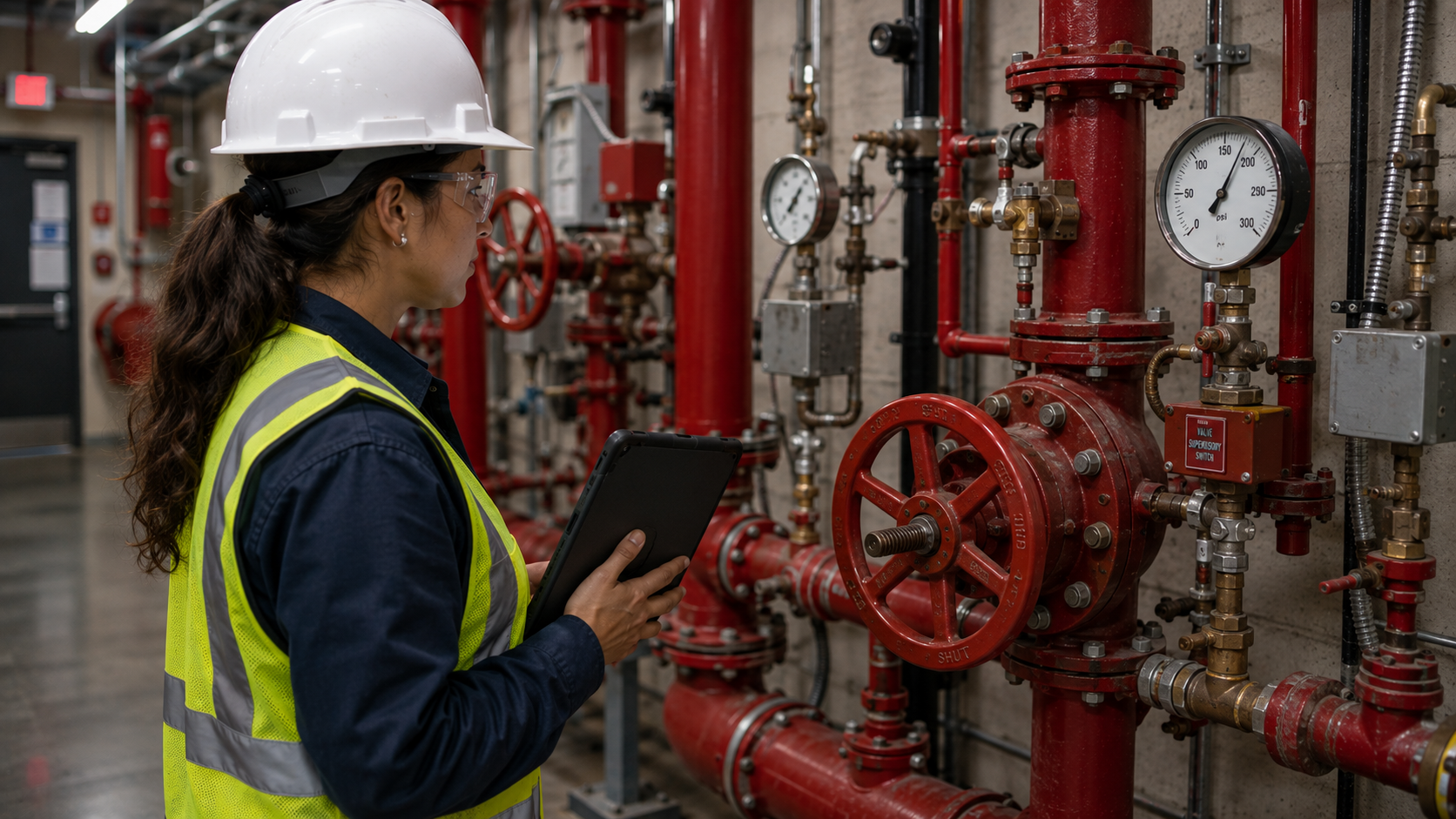
Under NFPA standards, most fire protection systems require inspection and testing on defined schedules. Sprinkler systems fall under NFPA 25, fire alarm systems under NFPA 72, and portable fire extinguishers under NFPA 10. Each standard specifies what is tested, how often, and the documentation required to demonstrate compliance.
For fire contractors, managing that compliance picture across dozens or hundreds of client buildings is where the operational weight lives, and where paper-based processes tend to break down first.
Active vs. Passive Fire Protection
Every fire protection system falls into one of two categories: active or passive. Both are essential. Neither is sufficient on its own. Learn more about the difference between active and passive fire protection systems below:
What Is Active Fire Protection?
Active fire protection refers to any system that requires a trigger, whether automatic or manual, to respond to a fire. These are the systems that detect smoke, sound alarms, and work to suppress or extinguish a fire in real time.
Common examples include:
- Fire alarm and smoke detection systems
- Automatic sprinkler systems
- Fire extinguishers
- Suppression systems using clean agents, CO2, or foam (used in environments where water would damage equipment)
- Emergency notification systems
What Is Passive Fire Protection?
Passive fire protection is built into the structure of a building itself. Rather than activating in response to a fire, passive systems work continuously and silently by limiting where fire and smoke can travel.
Common examples include:
- Fire-rated walls and floors
- Fire doors
- Compartmentalization (dividing a building into sections to contain fire spread)
- Fire dampers inside ductwork
- Intumescent materials that expand to seal gaps when exposed to heat
Because passive systems don't rely on mechanical triggers, they function even when active systems fail. This functionality makes passive systems a critical backstop, not a backup plan.
What Are Fire Protection Systems Designed to Do? The Three Goals of Fire Protection
Fire protection systems aren't designed to just put out fires. They're designed around three specific objectives that shape how systems are specified, installed, and prioritized. These objectives include:
- Life Safety: The primary goal of any fire protection system is to protect the people inside a building. Early detection, emergency notification, clear egress routes, and rapid suppression all buy time, and time is what saves lives.
- Property Protection: Beyond life safety, fire protection limits structural damage and asset loss. Suppression systems, compartmentalization, and fire-resistant construction materials all work to contain a fire before it consumes a building and everything in it.
- Operational Continuity: A fire doesn't have to destroy a building to shut a business down. The third goal of fire protection is minimizing disruption by reducing recovery time, protecting critical infrastructure, and helping organizations resume operations as quickly as possible after an incident.
These three goals aren't independent. A data center, for example, might weigh property protection and continuity more heavily than a warehouse, driving different system choices and design priorities.
Common Types of Fire Protection Systems
The specific systems that make fire protection work in practice vary by building type, occupancy, and applicable code requirements. That said, most commercial fire protection programs include some combination of the following:
- Fire alarm and detection systems: Smoke detectors, heat detectors, and integrated alarm systems that alert occupants and dispatch emergency services.
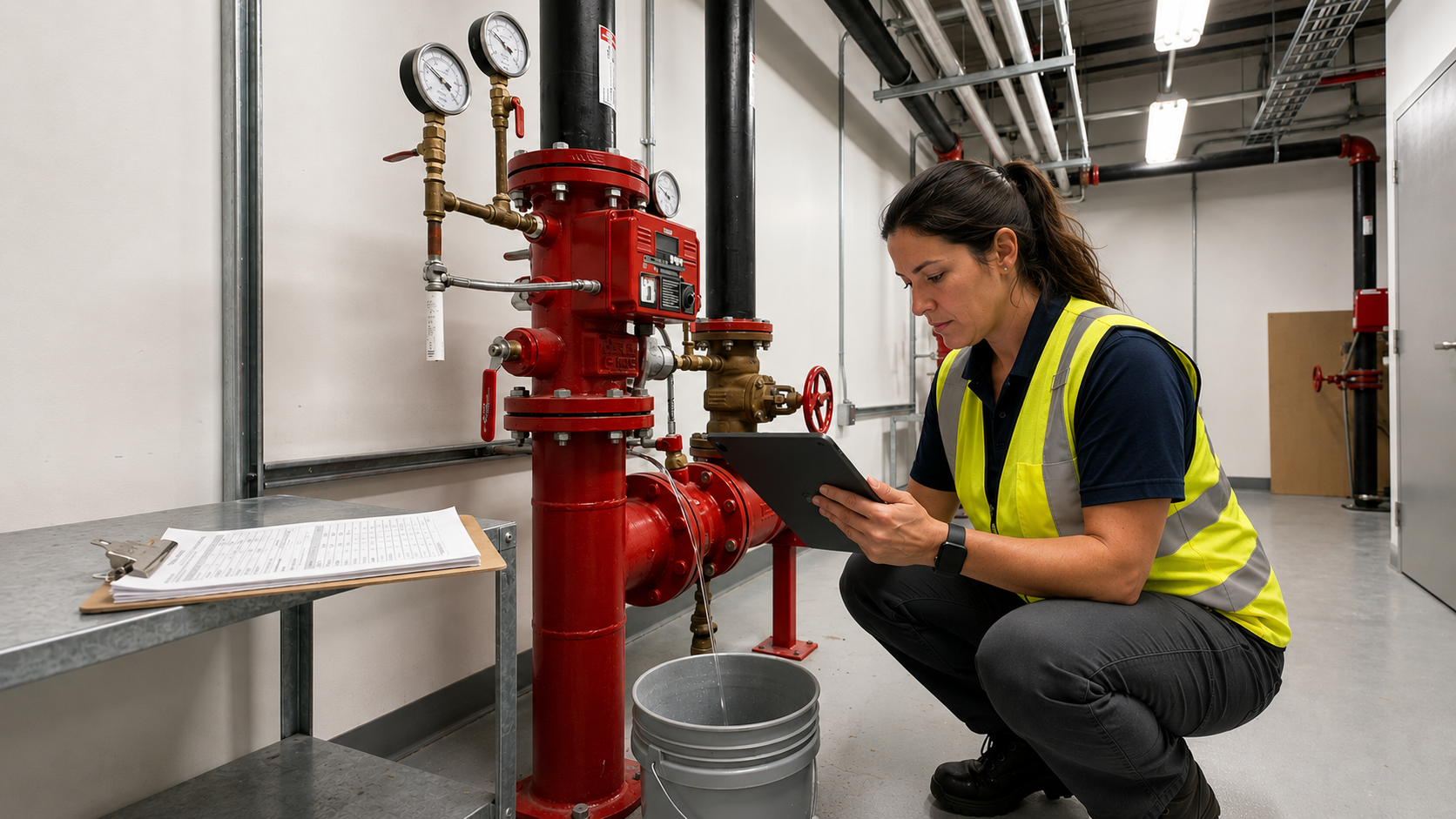
- Sprinkler systems: Automatic water-based suppression, governed by NFPA 13 for installation and NFPA 25 for inspection and maintenance.
- Fire extinguishers: Portable, manually operated suppression for early-stage fires, governed by NFPA 10.
- Special hazard suppression systems: Clean agent, CO2, and foam systems used in server rooms, industrial facilities, and other environments where water-based suppression would cause secondary damage.
- Passive systems: Fire-rated assemblies, doors, and dampers that contain fire and smoke without mechanical activation.
System selection is dictated by building construction type, occupancy classification, hazard level, and the requirements of the local AHJ.
What Is the Difference Between Fire Prevention and Fire Protection?
Fire protection and fire prevention are terms often used interchangeably, but they shouldn't be.
Fire prevention is proactive. Before a fire has any chance to start, prevention measures are already at work. For example, fire prevention often involves eliminating ignition sources, ensuring proper storage of flammable materials, training staff, and keeping equipment maintained.
Fire protection, by contrast, is what happens when prevention isn't enough. Protection systems respond once a fire is burning, working to detect it, contain its spread, suppress it, and get people out safely. Fire suppression is a subset of that response, focused specifically on extinguishing the fire itself.
Prevention reduces the probability of a fire. Protection reduces the severity when one occurs. Both are necessary, and neither replaces the other.
Ensure Your Fire Protection Systems Are Running at Their Best With Ember
Every fire protection system requires regular inspection, testing, and maintenance to meet NFPA standards and satisfy AHJ requirements. When that work slips, systems fail, and failed systems stop working precisely when they're needed most. Ember keeps contractors ahead of that risk with NFPA-compliant digital inspection forms, offline-capable mobile access, and one-click AHJ submissions.
Learn more about our fire inspection software today. If you’d like to see our software in action, please book a free demo.
News & Resources
Ready to simplify your fire inspection workflow?
Get a Free Demo