What Is a Life Safety Inspection?
Review our guide to life safety inspections and what gets checked today!

Key Takeaways
- A life safety inspection evaluates a commercial building's fire protection systems, means of egress, fire suppression equipment, and electrical and hazardous materials storage against the requirements of NFPA 101 and any applicable state or local amendments.
- Three layers of authority govern life safety inspections, as NFPA 101 sets the model code, AHJs enforce it locally, and state and local governments add jurisdiction-specific requirements on top.
- Each fire protection system follows its own NFPA-mandated inspection schedule, ranging from weekly control valve checks to five-year internal pipe inspections, and a compliant program accounts for all of them.
- Most inspection failures trace back to deferred maintenance and missing documentation rather than outright system failure.
- Every deficiency a fire contractor identifies and documents is a repair opportunity, and a thorough inspection report is the starting point for a professional proposal.
Every year, electrical malfunctions alone cause more than $354 million in commercial building fire damage in the United States. Strip away the wiring failures, and there's still a long list of preventable hazards waiting to catch a building off guard, such as compromised sprinkler systems, blocked exit routes, and overdue extinguisher service. A life safety inspection exists to find those problems before an emergency does.
For building owners and property managers, a life safety inspection is a compliance requirement. For fire protection contractors, understanding what these inspections cover is the foundation for doing the job right.
What Is a Life Safety Inspection?
A life safety inspection is a formal evaluation of a building's fire protection systems, egress features, and emergency equipment to verify compliance with NFPA 101: Life Safety Code.
Beyond that baseline definition, the inspection examines whether a building's construction, installed systems, and operational characteristics adequately protect occupants from fire, smoke, and panic during an emergency. A building passes when it meets all applicable requirements under NFPA 101 and any relevant state or local amendments.
A fire and life safety inspection may be conducted by a licensed fire protection contractor, a fire marshal, or an Authority Having Jurisdiction (AHJ). Sometimes, all three may conduct an inspection, with the inspection requirements depending on the building type and local rules.
Who Requires Life Safety Inspections?
The authority behind life safety inspections flows from three interconnected sources, including NFPA 101, the Authorities Having Jurisdiction (AHJ), and state and local governments. Learn more about these authorities’ requirements below:
- NFPA 101: The model code governing life safety in both new and existing structures. Most states adopt it (sometimes with modifications) as part of their state fire code, and it's revised every three years to reflect changes in building technology and best practices.
- Authorities Having Jurisdiction (AHJs): Local enforcement bodies that have the authority to require inspections, approve plans, and issue correction orders based on applicable code requirements. Examples of these local enforcement bodies include fire marshals, building inspectors, and state fire commissioners.
- State and local governments: Additional requirements layered on top of the model code that vary significantly by jurisdiction. California's Title 19, for example, adds state-specific inspection and reporting standards that go beyond NFPA 101, with fire contractors operating there needing accurate, compliant Title 19 forms to meet them. Fire contractors need to know the specific amendments and inspection schedules where they operate, not just NFPA 101 in isolation.
Virtually any occupied commercial structure falls under NFPA 101's scope. For example, NFPA 101 applies to offices, retail establishments, healthcare facilities, schools, warehouses, restaurants, hotels, and multi-family residential buildings. Since the code organizes requirements by occupancy classification, what inspectors look for in a hospital is meaningfully different from what they check in a warehouse.
What Gets Inspected During a Life Safety Inspection?: The Four Key Components
The life safety inspection checklist covers a wide range of systems and physical features, generally organized into the following four categories:
Fire Protection Systems
Fire protection systems are the core of any life safety inspection. Fire alarm systems encompass the control panel, smoke and heat detectors, manual pull stations, notification appliances, and backup power supplies. Inspectors verify that each component functions as designed and that documentation reflects current building conditions.
NFPA 72, the National Fire Alarm and Signaling Code, governs how alarm systems are inspected, tested, and maintained. Since components age and degrade independently, many jurisdictions require semiannual inspections in addition to the standard annual visit.
Means of Egress
Often the most overlooked category on a life safety inspection checklist, means of egress addresses how occupants actually get out. Corridors, stairwells, exit signs, emergency lighting, and exit doors (including hardware, swing direction, and ease of operation) are all evaluated.
Under NFPA 101, emergency lighting must illuminate exit paths for a minimum of 90 minutes, a standard verified through testing. Exit routes must also be clear of obstructions, properly marked, and sized for the building's occupant load. A propped fire door or a pallet blocking a corridor exit is a violation that, depending on the jurisdiction, can require immediate correction.
Fire Suppression Equipment
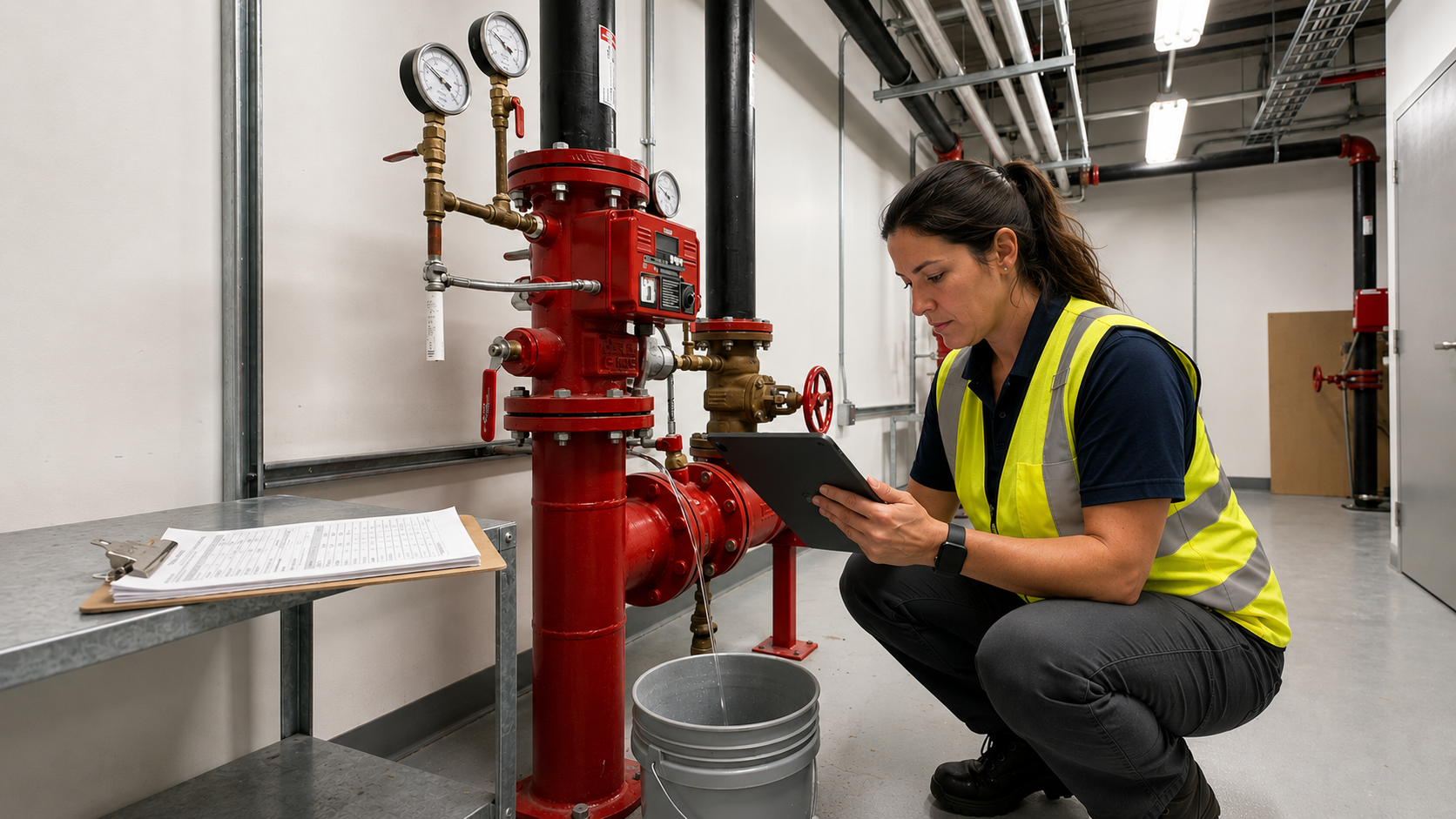
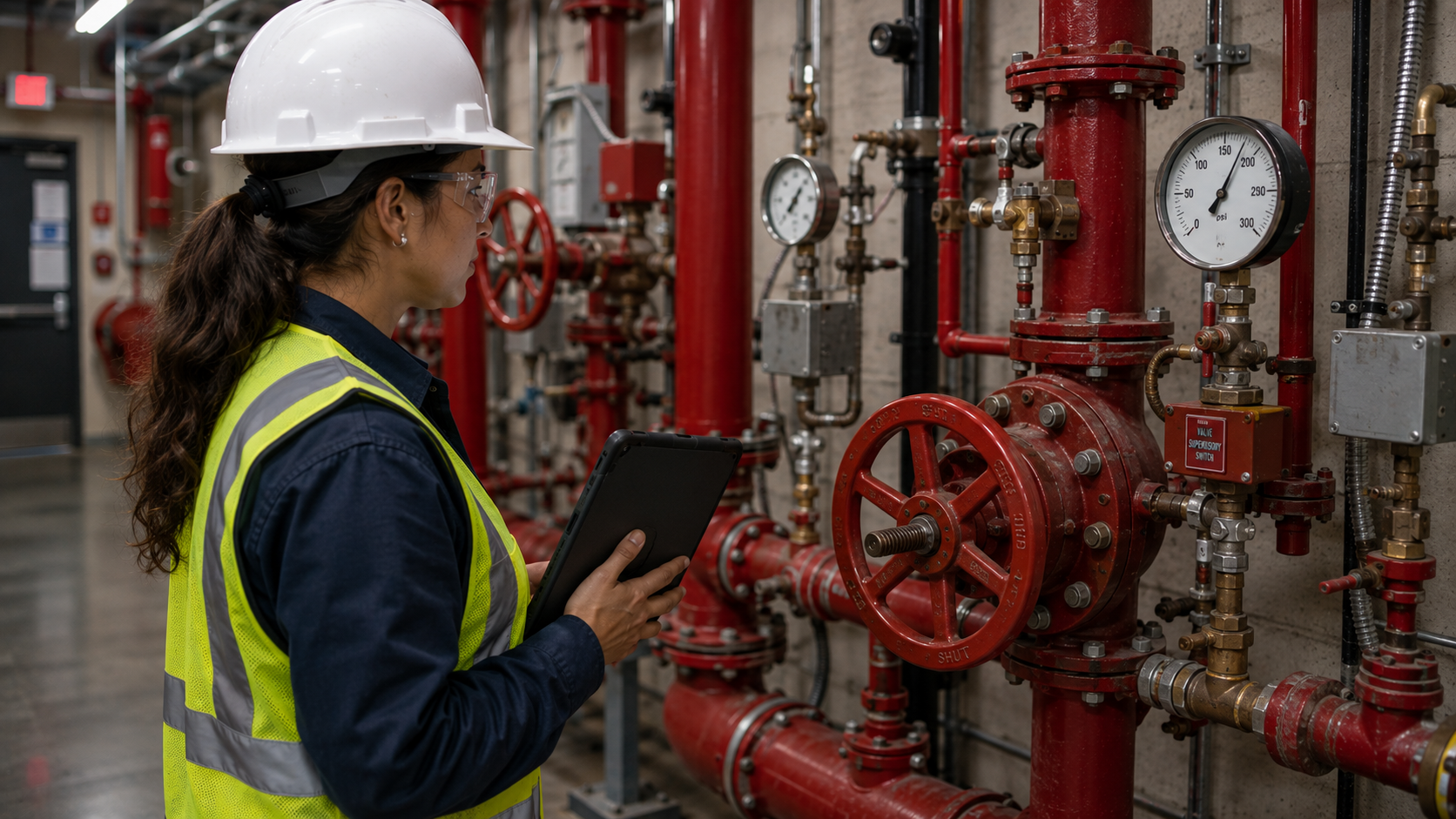
Automatic suppression systems and portable equipment are both covered here. For sprinkler systems, inspectors follow NFPA 25, examining control valves, alarm valves, water supply, and sprinkler heads for corrosion or damage.
Fire extinguishers fall under NFPA 10. Proper placement, accessibility, pressure, tamper seals, and current service tags are all checked. A missing tag or an obstructed mounting location are among the most common findings.
Electrical Systems and Hazardous Materials
Emergency generators, transfer switches, battery backup systems, and electrical panels are reviewed to confirm they can support critical systems during a power failure.
Storage areas for flammable and combustible materials are also assessed for proper quantities, containment, and separation from ignition sources. Improper storage remains one of the more common violations found in industrial and warehouse occupancies.
What Happens During a Life Safety Inspection?
A fire and life safety inspection isn't a quick walkthrough. Before arriving on site, inspectors typically review previous inspection records, deficiency reports, and any outstanding correction orders. This review allows them to follow a paper trail that shows where problems have been found before and whether they were resolved.
The on-site work covers every system through physical examination and functional tests. For example, the inspection involves activating alarm components, testing emergency lighting, verifying sprinkler control valve positions, checking extinguisher conditions, and walking every exit route.
When deficiencies are found, they're documented with enough specificity that the building owner understands the issue, its location, and the applicable code section. Some require immediate correction, while others allow a reasonable timeframe, followed by a re-inspection to confirm compliance.
Common Reasons Inspections Fail
Most inspection failures come down to deferred maintenance and lack of documentation. The most frequently cited deficiencies include:
- Blocked or improperly maintained exits: Propped fire doors, storage in egress corridors, and inoperative exit hardware consistently appear on deficiency reports across occupancy types.
- Overdue or missing extinguisher service: Expired service tags, missing monthly inspection records, or units pulled from their designated mounting locations are citations that are entirely preventable.
- Sprinkler system issues: Closed control valves, corroded or painted-over sprinkler heads, and gaps in five-year internal inspection records are common findings, particularly in older buildings.
- Deficient fire alarm documentation: Missing test records, outdated device lists, and alarm systems without proper backup power documentation routinely trigger violations.
- Emergency lighting failures: Batteries that fail the 90-minute drain test, missing or damaged exit signs, and inadequate lighting in stairwells are among the most common violations found during testing.
- Improperly stored flammable materials: Chemicals stored too close to ignition sources or in quantities exceeding permitted limits are recurring issues in manufacturing and warehouse occupancies.
For fire contractors, deficiencies are repair and service opportunities. A well-documented deficiency report is the starting point for a proposal.
How Often Are Life Safety Inspections Required?
There is no single annual schedule that covers everything. Each system has its own inspection timeline under its governing NFPA standard:
- Fire alarm systems (NFPA 72): Monthly for certain components, semiannual for others, full system annually.
- Sprinkler systems (NFPA 25): Control valves weekly (only unsupervised, as monthly inspections are required for supervised control valves), alarm valves quarterly, full system annually, internal pipe inspection every five years.
- Fire extinguishers (NFPA 10): Monthly check by facility staff, certified annual inspection, six-year internal maintenance, hydrostatic testing every five or twelve years, depending on type.
- Fire doors (NFPA 80): Annual inspection,
Keep in mind that NFPA 101 is updated every three years. What passed inspection five years ago may not meet current code, particularly in states that have recently adopted a newer edition. Staying current with code adoption in your jurisdiction isn't optional.
The Benefits Beyond Compliance
Meeting fire code is the baseline, not the ceiling. Buildings with documented inspection histories carry reduced liability exposure, and insurance carriers frequently offer lower premiums for properties with consistent compliance records. Conversely, gaps in inspection documentation can complicate or invalidate coverage claims when a fire does occur.
Beyond the insurance picture, regular inspections extend the useful life of fire protection equipment by catching corrosion, pressure loss, and component wear before systems fail. Identifying these issues early (and acting on them!) translates to lower long-term maintenance costs.
Make Life Safety Inspections More Efficient with Ember
Ember is purpose-built for fire protection companies running life safety inspections. When you use our fire inspection software, you can expect NFPA and state-specific-compliant digital forms (like Title 19 forms in California!) to auto-populate with asset data from past inspections, deficiencies to convert directly into branded proposals, and one-click AHJ submissions to cut the time between a completed inspection and a delivered report.
If you’re ready to see how it works, learn more about our fire inspection software or schedule a demo.
News & Resources
Ready to simplify your fire inspection workflow?
Get a Free Demo