
How to Hire and Train Fire Inspection Technicians
Hire and train each new fire inspector with a NICET career path, a 90-day onboarding plan, and a competency checklist.

Key Takeaways
- Hiring and training fire inspection technicians works best when every role maps to a certification level, a set onboarding timeline, and a competency checklist tied to NFPA 25 and NFPA 72
- NICET's inspection and testing certifications give new techs a visible path from Level I upward.
- A 90-day onboarding plan pairs each new hire with a senior mentor and ends with the new tech leading inspections on basic systems under the mentor's review.
- Weighting report accuracy over inspection volume keeps new techs from rushing the documentation customers and AHJs rely on.
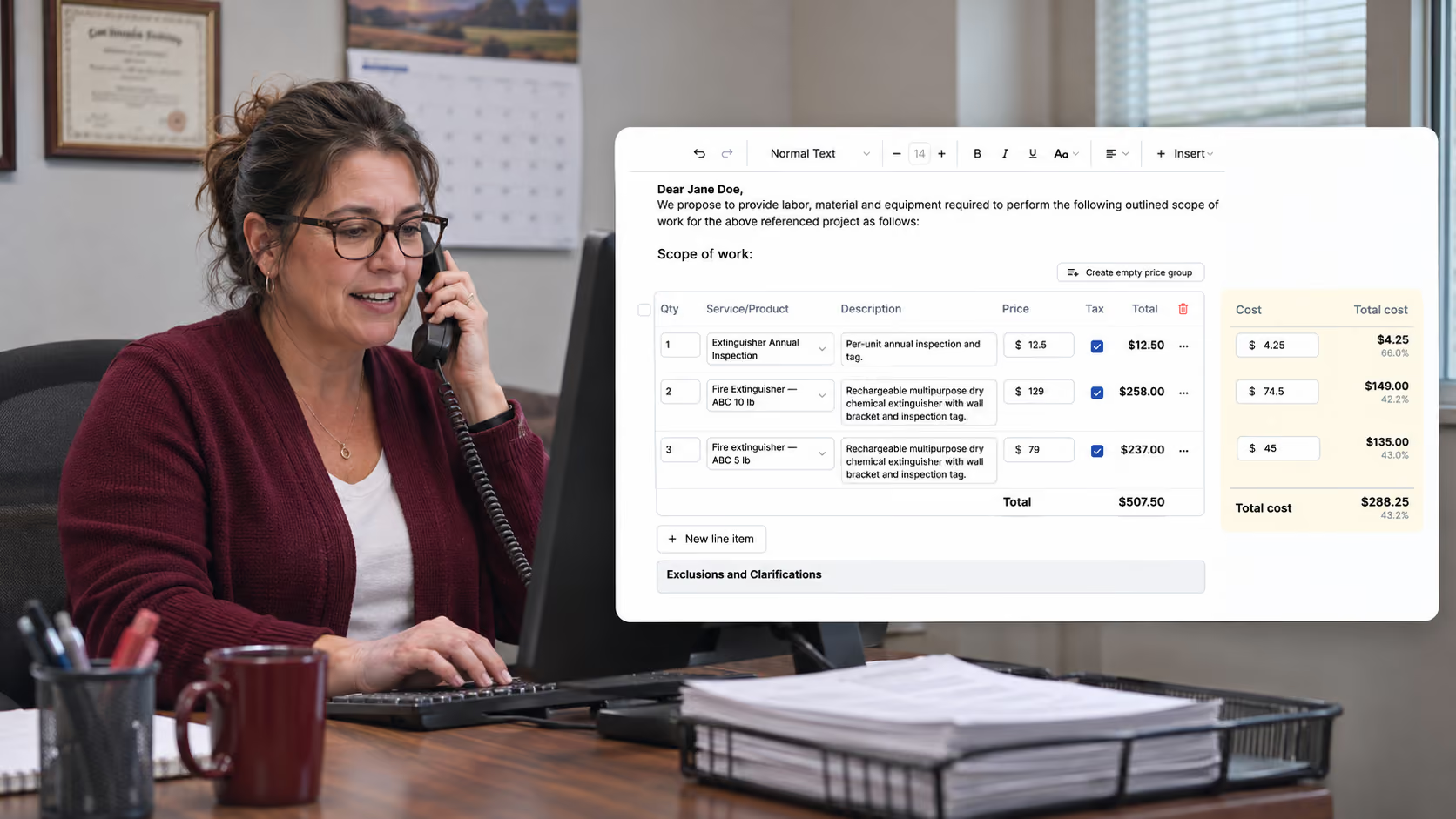
- Ember's job management for the field feature keeps lockbox codes, zone notes, and inspection history in the job record, so a senior tech's retirement doesn't take site knowledge with it.
Your most experienced technician gives two weeks' notice. On his last day, he takes the gate code for a hospital campus, the quirks of a warehouse panel, and the name of the engineer who needs a call before any flow test. Later, when you did this information, you realize that none of it was ever written down.
The shortage across the skilled trades, including fire protection, makes replacing him harder still. In NFPA's 2026 State of the Skilled Trades report, 53% of skilled trades respondents expect a shortage of qualified candidates to be their biggest challenge in 2026, and 33% cited a lack of knowledge sharing on the jobsite. To solve both the candidate shortage and the knowledge gap, you need a plan for hiring fire protection technicians and the time to train and retain them once they start.
What Are the NICET Levels for Fire Inspection Technicians?
The National Institute for Certification in Engineering Technologies (NICET) certifies fire inspection technicians in progressive levels. Level I covers supervised entry-level work, and each higher level requires more experience, exams, and verified field tasks.
For hiring, NICET gives you a common yardstick for comparing candidates. Because every level requires documented work history and supervisor-verified tasks, a candidate's NICET level shows how much verified inspection experience they bring. Some states and local jurisdictions also write NICET levels directly into licensing requirements, which can determine whether a new hire is allowed to perform certain inspections.
When you screen candidates, two NICET programs matter most for inspection-focused roles. Inspection and Testing of Water-Based Systems (ITWBS) covers existing water-based systems under NFPA 25 and runs across three levels. The NICET fire alarm certification, Inspection and Testing of Fire Alarm Systems (ITFAS), is built for periodic fire alarm inspections and has two levels.
Alarm techs who branch into installation or design can continue into the broader Fire Alarm Systems program, which runs through Level IV. NICET certification must be renewed every three years, so confirm a candidate's status through NICET's verification tool before making an offer.
For fire alarm work, NFPA 72 accepts certification from a nationally recognized organization as one way to show a technician is qualified, although the authority having jurisdiction (AHJ) decides which certifications count. Before you write a job requirement, check what your AHJs accept for fire alarm inspector certification. Sprinkler ITM falls under NFPA 25 and state licensing rules, so confirm fire sprinkler inspector certification requirements with each jurisdiction separately.
How to Hire and Train Fire Inspection Technicians in 5 Steps
Here are five steps for hiring fire inspection technicians and training them to work solo on a NICET career path:
1. Define the Role by Discipline Before You Post It
A generic "fire inspection technician" posting draws applicants from across the trades, so name the discipline, standard, and first-year certification. Most inspection roles fall into one of three disciplines, and each follows its own standard and certification path.
Fire alarm technicians inspect and test to NFPA 72 and usually work toward ITFAS. On the water-based side, sprinkler ITM techs follow NFPA 25 and target ITWBS. The third group, extinguisher and kitchen suppression techs, works under NFPA 10 and NFPA 17A and often needs ICC/NAFED certification for state licensing, since NICET's inspection programs don't cover those systems.
2. Recruit Journeymen and Grow Your Own Through Apprenticeship
Fire technician recruiting starts with journeymen, since inspection work builds on install experience. A journeyman sprinkler fitter already knows the valves and piping NFPA 25 covers, and a journeyman electrician already reads alarm panels and circuits. Their install background shortens the learning curve, although NICET credits only a few months of installation work toward its inspection certifications. Referrals from your crew can reach journeymen who aren't job hunting.
When the local pool runs thin, grow your own. Merit shops can run a fire sprinkler fitter apprenticeship around AFSA's curriculum, and union shops in Local 669's jurisdiction can hire through its five-year apprenticeship, which may credit veterans up to six months with a DD214. Trade school graduates make strong apprentice candidates too.
For new or transitioning inspectors, AFSA's 20-month ITM Inspector Development Program prepares them for the NICET Level I and II exams.
3. Onboard New Hires on a 90-Day Timeline With a Senior Mentor
Fire technician onboarding works best with a 90-day plan your new hire can see on day one:
- Weeks 1 to 4: Your new hire shadows a named senior technician on routine inspections, learning your reporting and safety standards.
- Weeks 5 to 8: Hands-on work begins under direct supervision, with the mentor signing off on each task.
- Weeks 9 to 12: Your new inspector leads inspections on basic systems with the mentor on site or on call, and every report is reviewed before it goes out.
Plan the first NICET exam around six months in, since ITFAS Level I requires at least six months of experience for certification. Adding a regular check-in between each new tech and their mentor to your Service Manager's daily checklist keeps onboarding on track.
Shadowing only goes so far when site knowledge lives in a senior tech's memory or a binder in his truck. Ember's job management for the field feature keeps lockbox codes, zone designations, prior technician notes, and inspection history in each job record, so a new technician walks into an unfamiliar building with much of the context a veteran would bring.
4. Train Against the Fire Inspection Technician Competency Checklist
Structured fire inspection technician training starts with tasks you can observe. The checklist below adapts NICET's Level I performance measures and the ITFAS content outline, so many of these sign-offs match tasks NICET asks supervisors to verify.
Water-Based Systems (NFPA 25)
- Find inspection and testing requirements in NFPA 25
- Identify common system components and test equipment
- Confirm control valves are in the correct position
- Spot physical damage to system components
Fire Alarm Systems (NFPA 72)
- Plan which devices to inspect, how many, and where they are
- Coordinate testing with the owner or building manager
- Inspect control units, power supplies, wiring, and initiating devices
- Identify findings and issue the required notifications
- Confirm the system is restored to normal after testing
Documentation and Safety
- Maintain personal safety on the jobsite
- Complete every required report field before leaving the site
- File inspection records and reports correctly
As techs work through the list, prioritize report accuracy over inspection volume, since incomplete reports create office rework and rejected AHJ submissions.
Digital fire inspection forms in Ember support that review. Required fields keep a technician from completing an inspection with missing information, and each report stays attributed to its technician in the site's inspection history.
5. Retain Technicians With Pay, Progression, and Continuing Education
A career ladder built on NICET shows every hire the next step.
Tie a raise to each rung, and pace those raises to NICET's experience minimums, which start at six months for Level I and reach five years for ITWBS Level III. Paying for exams and study time helps techs keep climbing. In NFPA's 2025 conference survey, 35% of skilled trades respondents said lack of time holds back their training and 30% cited cost.
Continuing education should follow the codes. NICET's updated ITWBS exams draw on the 2023 edition of NFPA 25, so schedule NFPA 25 and NFPA 72 training whenever your AHJs adopt a new edition.
Give Every New Hire the Site Knowledge Your Senior Techs Carry
One simple way to shorten a new technician's ramp-up is to stop making them learn every site from scratch. Ember’s fire inspection software built for fire protection contractors, makes that shift possible by keeping site knowledge in each job record. Its Job Management for the Field feature puts access codes, floor notes, and inspection history on a tech's phone before they arrive. Digital Fire Inspection Forms also prefill customer and asset data, so new hires can focus on the inspection.
See how Ember puts every job detail in front of your technicians before they reach the site. Book a free demo to see how it fits your team's onboarding.
News & Resources

Ready to simplify your fire inspection workflow?
Get a Free Demo


