NFPA 72 vs. NFPA 25: What's the Difference?
Service fire alarms and sprinklers? See how NFPA 72 and NFPA 25 differ on scope, deficiency classification, waterflow switch testing, and records.

Service fire alarms and sprinklers? See how NFPA 72 and NFPA 25 differ on scope, deficiency classification, waterflow switch testing, and records.
NFPA 72 vs. NFPA 25: What's the Difference?
Key Takeaways
- NFPA 72 is the National Fire Alarm and Signaling Code, while NFPA 25 covers inspection, testing, and maintenance of water-based systems like sprinklers.
- While NFPA 25 covers only inspection, testing, and maintenance, NFPA 72 also covers design and installation and includes its ITM rules in Chapter 14.
- Waterflow, tamper, and pressure switches sit on sprinkler piping but signal the alarm panel, so testing them falls under both standards.
- NFPA 25 splits deficiencies into critical and noncritical tiers, while NFPA 72 pairs a single deficiency category with impairments and observations.
- Contractors who service both systems manage two documentation packages with separate record and notification rules.
Imagine you have an office building on your schedule this month. It's due for a semiannual fire alarm inspection and a sprinkler inspection, so you've booked an alarm technician and a sprinkler technician for the same week. Both will touch the same waterflow switch, each will write up findings in a different vocabulary, and your office will assemble two reports for one AHJ.
Building owners can treat the difference between these two NFPA codes as background knowledge, since someone else handles the NFPA inspections. When your company is that someone for both systems, the split between NFPA 72 and NFPA 25 shapes how you staff each visit, classify what your techs find, and document the work.
What Is NFPA 72?
NFPA 72 is the National Fire Alarm and Signaling Code. It covers how fire alarm and signaling systems are designed, installed, inspected, tested, and maintained.
Much of the code covers design and installation, while a single chapter, NFPA 72 Chapter 14, addresses inspection, testing, and maintenance (ITM). It holds the inspection and test frequency tables, the test methods for each device, and the rules for reporting deficiencies, so alarm techs work from it on almost every visit. Impairments fall under Section 10.21 instead.
Keep in mind that the current NFPA 72 edition is 2025, although your AHJ may still enforce an older one.
What Is NFPA 25?
NFPA 25 is the standard for inspecting, testing, and maintaining water-based fire protection systems, including sprinklers, standpipes, and fire pumps, after installation.
Its full title is the Standard for the Inspection, Testing, and Maintenance of Water-Based Fire
Protection Systems, and the 2026 edition is the latest. Unlike NFPA 72, it's an ITM document from front to back.
Design and installation fall under separate standards, including NFPA 13 for sprinklers, NFPA 14 for standpipes, and NFPA 20 for fire pumps. NFPA 25 picks up once a system is in service, with inspection and testing frequencies as short as a week and as long as several years.
NFPA 72 vs. NFPA 25 at a Glance
The table below breaks down the difference between NFPA 25 and NFPA 72 on the points that affect your staffing and reporting.
Where the Two Standards Overlap: Waterflow, Tamper, and Pressure Switches
Waterflow, tamper, and pressure switches are where NFPA 25 vs. NFPA 72 stops being a clean split. All three devices are installed on sprinkler piping but wired to the alarm panel.
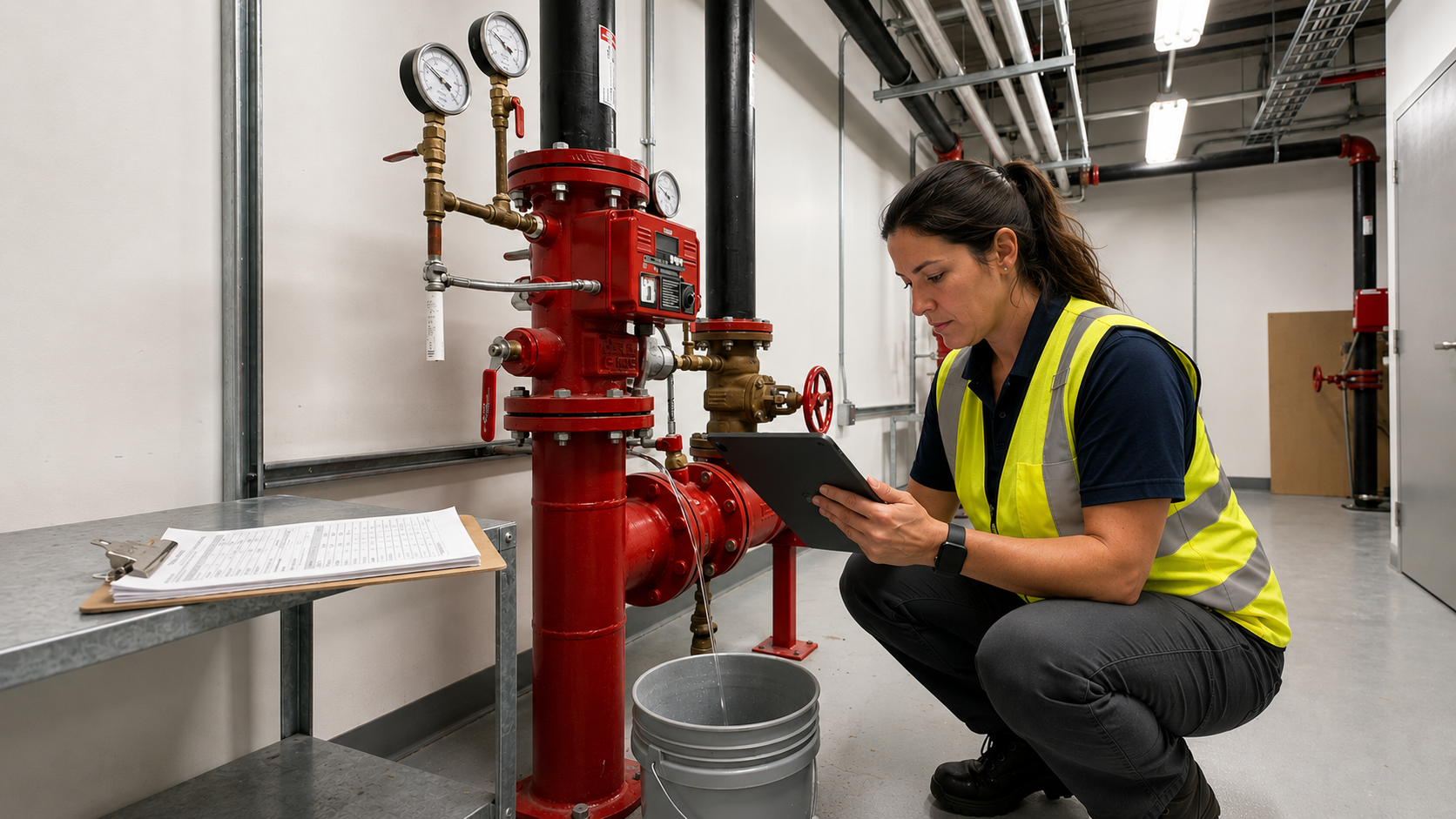
A waterflow switch signals when water moves through the pipe, a tamper switch signals when a control valve starts to close, and pressure switches, including low air alarm switches on dry and pre-action systems, signal when supervisory air pressure drops. For flow and tamper switches, NFPA 25 requires that testing comply with both standards.
These switches aren't considered smart devices. Each one connects to a monitor module that gives the device its address, and the monitor module communicates back with the fire alarm panel.
The module also gives you an easy way to classify who does what. A sprinkler tech checks a flow or tamper switch to ensure it triggers the relay in the monitor module, and an alarm technician makes sure the module is communicating back with the fire alarm panel and reporting the correct condition, either an alarm or a supervisory signal.
Under NFPA 25, waterflow switch testing is a semiannual requirement for vane-type and pressure-type devices, as is tamper switch testing. NFPA 72 sets the same semiannual interval for waterflow devices. On a wet pipe system, a dual-qualified technician, or both techs on one visit, can satisfy both standards' waterflow tests by opening the inspector's test connection once.
Visual inspection intervals are where the schedules split. In recent editions, NFPA 25 calls for a quarterly visual check of these devices, while NFPA 72 moved its visual check of waterflow and tamper switches to semiannual in the 2022 edition to match most other alarm equipment. Two of your four quarterly NFPA 25 inspections can also line up with alarm visits, and the other two stay sprinkler-only.
How NFPA 25 and NFPA 72 Classify Inspection Deficiencies
For NFPA 25 and NFPA 72 alarm inspection deficiencies, classification is where your two report packages start speaking different languages. Knowing how to classify sprinkler system deficiencies under NFPA 25 starts with three tiers, and NFPA's own definitions describe each one:
- Impairment: The system, or part of it, is out of order and may not work in a fire, which triggers the procedures in Chapter 15.
- Critical deficiency: Left uncorrected, the problem can materially affect whether the system performs as intended during a fire.
- Noncritical deficiency: The problem doesn't materially affect performance in a fire, but it still needs correcting to meet the standard.
NFPA 72 uses fewer tiers and gives less guidance on which conditions belong in each. The code defines a deficiency as a condition that interferes with system reliability and an impairment as a condition where a system or function isn't operable, but it leaves specific classifications to the AHJ. Since the 2022 edition was published, alarm techs can also log a third category, observation, for suggested improvements that fall short of a code deficiency.
Under the 2025 edition of NFPA 72, the owner must also be notified within 8 hours of an impairment, and an uncorrected deficiency requires written notice within 24 hours.
Documentation Requirements Under NFPA 72 and NFPA 25
Documentation doubles as well, and NFPA 72 alone uses two different records. The NFPA 72 record of completion is an installation document, filled out by the installing contractor and submitted to the AHJ and owner when the job wraps up. Routine visits use the NFPA 72 inspection and testing form, called the record of inspection and testing, while NFPA 25 requires its own ITM records for each water-based system.
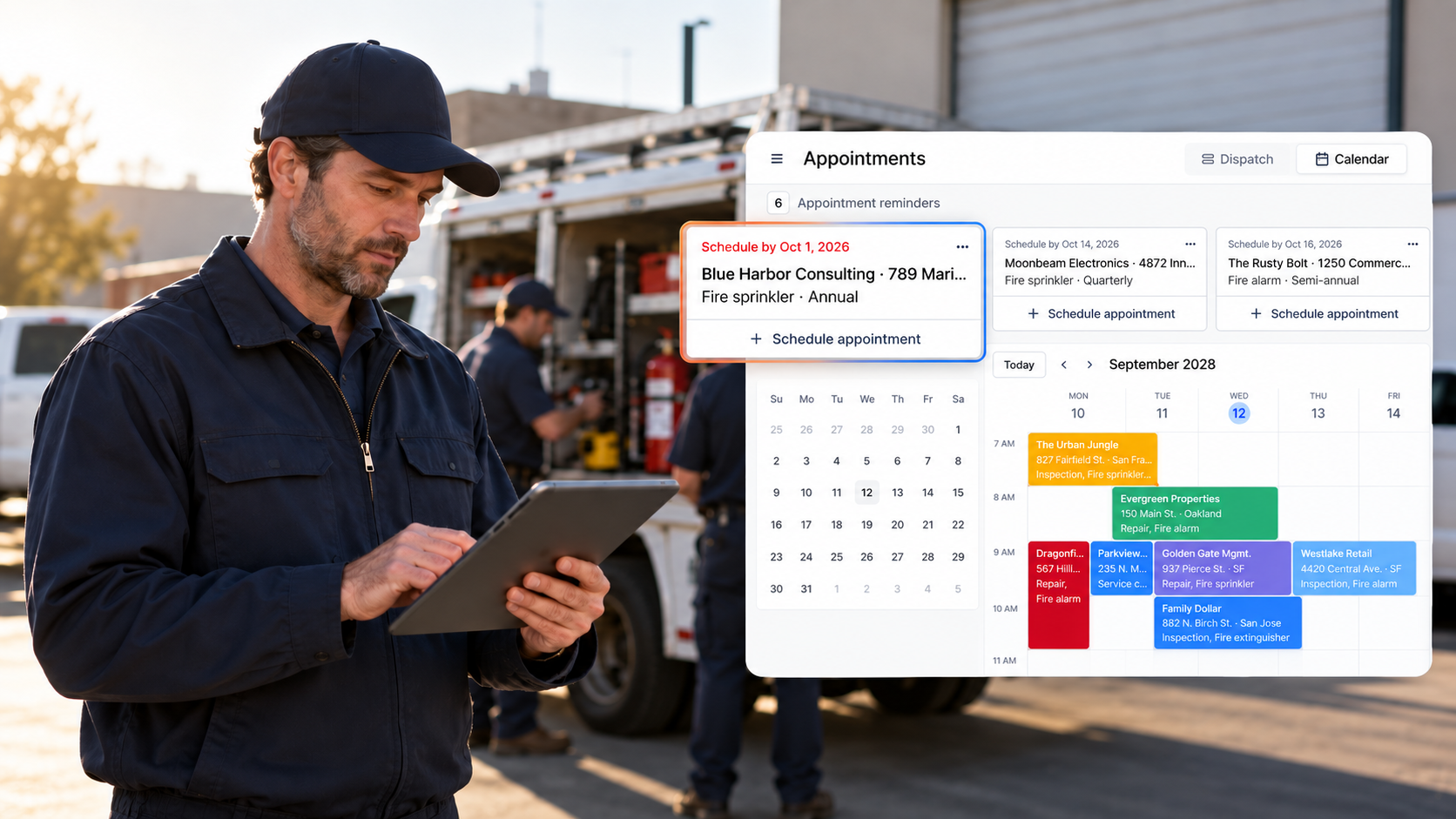
On paper, that means two form sets, two report packages, and a round of cross-checking to sort out which switch results belong where. Ember's Digital Inspection Forms come prefilled with customer, asset, and prior inspection data for each system type, including fire alarm and NFPA 25 sprinkler forms. Deficiencies get captured with photos and notes on site, and that data flows into reports, proposals, and AHJ submissions without re-entry.
Frequently Asked Questions
Who Can Perform NFPA 25 and NFPA 72 Inspections?
Both standards require qualified personnel, and many states and AHJs add licensing or certification rules on top of that. Always confirm local requirements.
Licensing often differs for alarm and sprinkler work, so check your local AHJ requirements first.
What Is the Latest Edition of NFPA 72?
The 2025 edition is the latest NFPA 72, but your AHJ may still enforce an older edition, so the adopted version is the one that applies.
Is a Semiannual Fire Alarm Inspection Required?
Yes. Since its 2022 edition, NFPA 72 has called for semiannual visual inspections of most initiating devices. Older editions set quarterly visual checks for waterflow and tamper switches.
Keep Both Report Packages Straight With Ember
Servicing alarms and sprinklers in the same buildings means two standards, two deficiency vocabularies, and two report packages. Ember is fire inspection software built for fire protection contractors, and it keeps both packages in one system. Its Digital Inspection Forms give alarm and sprinkler techs prefilled, NFPA-compliant forms for each system type, with required fields that capture every deficiency on site. Completed reports can go to AHJs on Brycer's The Compliance Engine, IROL, or LivSafe in one click.
See how Digital Inspection Forms cover fire alarms, sprinklers, and every other system your techs inspect. Book a free demo to walk through your own NFPA 25 and NFPA 72 workflow.
News & Resources

Ready to simplify your fire inspection workflow?
Get a Free Demo